
From Caves to Galleries: A Journey Through the Evolution of Wall Art Decor

Table of contents
- The Dawn of Expression: Cave Paintings
- Classical Antiquity: Murals and Frescoes
- The Middle Ages: Religious Reverence
- Renaissance: A Rebirth of Artistry
- Contemporary Era: Digital and Interactive Wall Art
- Conclusion: The Unending Canvas
Wall art decor stands as a testament to human creativity and ingenuity, a physical record of our cultural evolution and artistic expression. The journey of wall art is as varied and profound as humanity itself, encompassing a wide range of forms, styles, and meanings that have evolved over millennia. It's a reflection of our collective identity, our shared history, and our ongoing pursuit of beauty, understanding, and connection.
The impulse to decorate walls seems almost universal across different cultures and time periods. This age-old practice has its roots in our distant past, within the shadowed walls of prehistoric caves. Early humans, driven by an innate desire to communicate, to symbolize, to beautify, began etching their existence onto stone surfaces. Whether it was the thrill of the hunt, the reverence for nature, or the awakening of spiritual thoughts, these ancient images resonate with a primal yet sophisticated understanding of life.
Wall art serves as a living history, a continuous thread that weaves through the fabric of human civilization. It's not merely an aesthetic pursuit but a multifaceted narrative that unfolds across centuries and continents. From the mystic echoes of sacred temples to the vibrant hues of urban streets, wall art decor has adapted, challenged, and celebrated the ever-changing human experience.
The evolution of wall art is not a linear progression but a complex interplay of ideas, technologies, philosophies, and emotions. It is shaped by political upheavals, technological advancements, social transformations, and personal revelations. It's a dance of color, form, and symbolism that engages not just the eyes but the heart and mind.
What makes wall art particularly compelling is its accessibility and impact. Unlike art confined to galleries or private collections, wall art often lives in public spaces, accessible to all. It democratizes art, making it a shared experience that transcends social, economic, and cultural barriers. It is both personal and universal, inviting everyone to interpret, reflect, and respond. Moreover, wall art serves various purposes beyond mere decoration. It educates, inspires, protests, and heals. It captures moments in time, preserving memories and inspiring future generations. It connects people with their heritage, ignites social change, and fuels creative innovation.
This article embarks on an exploration of the evolution of wall art decor, tracing its meandering path from the earliest cave paintings to contemporary digital installations. It's an invitation to delve into a rich, vibrant world that mirrors our own complexities, contradictions, and creativity. As we journey through time, we will discover the myriad ways in which wall art has shaped and been shaped by human civilization. We will encounter the brilliance of classical antiquity, the reverence of the Middle Ages, the innovation of the Renaissance, the boldness of modern times, and the excitement of the contemporary era.
We will witness not just the transformation of techniques, materials, and styles but the unfolding of a profound human story, etched on the walls of history. A story that continues to unfold, inviting us all to add our own brushstrokes to the ever-expanding canvas of human expression and experience. So, let's begin this journey, and let's celebrate the unending artistry of dwelling, the timeless allure of wall art decor, and the enduring power of human creativity.
The Dawn of Expression: Cave Paintings
The story of wall art begins in the dimly lit recesses of prehistoric caves, where our ancestors took their first artistic steps. These early cave paintings represent the dawn of human creativity, a moment in time when people began to transcend mere survival to ponder and portray their existence in more symbolic terms.
The Sites and Discoveries
The caves of Lascaux in France, Altamira in Spain, and many other sites across Europe, Africa, and Asia host an array of intricate paintings of animals, humans, and abstract shapes. These images were crafted using natural pigments such as ochre, charcoal, and hematite, often mixed with animal fat or plant juice to create a rudimentary form of paint.
Some of these cave paintings date back over 40,000 years, making them among the earliest known works of art. Their discovery in the 19th and 20th centuries sparked a revolution in our understanding of prehistoric culture, opening a window into the thoughts, beliefs, and daily life of Paleolithic people.
Symbolism and Purpose
Cave paintings were not mere decorations or idle doodles. Scholars believe that these paintings possibly served spiritual or ritualistic purposes. They may have been part of shamanistic practices or served as a communal effort to connect with the spiritual world. Some paintings depict scenes of hunting, suggesting a magical or symbolic attempt to ensure success in the real hunt.
The portrayal of animals, often with meticulous attention to detail, hints at a profound connection between early humans and their environment. The images may have reflected the community's understanding of the seasons, animal behavior, and the natural world, thus serving as early forms of education and knowledge transmission.
Techniques and Innovations
Despite the rudimentary tools available to them, early artists demonstrated remarkable skill and creativity. They used fingers, twigs, feathers, and even chewed ends of branches to apply the paint. Some artists utilized the natural contours of the cave walls to add dimension and perspective to their subjects.
The cave paintings show a surprising variety of techniques, including outlining, shading, and layering. There are even examples of using stencils, where artists would blow pigment around a hand or object, creating a negative image on the wall.
The Legacy of Cave Art
Cave paintings are more than just historical artifacts; they are the foundational roots of human creativity. They signify the awakening of symbolic thought, the ability to conceptualize and communicate abstract ideas. This ability to symbolize, to create art, sets us apart from other species and marks a significant step in our cognitive evolution.
The cave paintings also remind us of the universality of artistic expression. Despite the geographical distances and cultural differences, similar patterns and themes emerge in cave art across different regions. This commonality points to a shared human experience, a universal language of art that transcends time and space.
A Timeless Connection
The dawn of expression found in cave paintings continues to resonate with us today. As we stand before these ancient images, we are connected to a distant past, to the very essence of our humanity. We feel the pulse of life as it was thousands of years ago, the fears, hopes, dreams, and wisdom of our earliest ancestors.
The cave paintings are not mere relics but living symbols of our innate need to understand, interpret, and beautify our world. They are the first brushstrokes in a never-ending story of human creativity, a story that began in the depths of a cave and continues to unfold across the galleries, walls, and screens of our modern world. They are a timeless testament to the indomitable spirit of human expression, a precious legacy that continues to inspire and challenge us as we add our own chapters to the ever-evolving narrative of art.
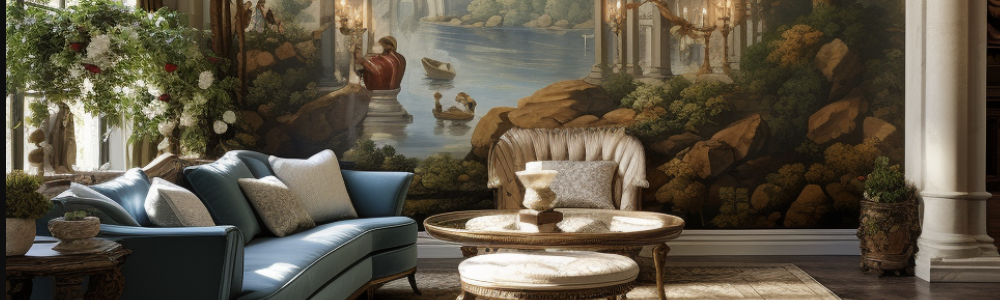
Classical Antiquity: Murals and Frescoes
The classical period marked a profound shift in the history of wall art. As civilizations flourished around the Mediterranean, particularly in Greece and Rome, the art of decorating walls took on new forms, meanings, and techniques. This era gave rise to some of the most celebrated and intricate examples of murals and frescoes, setting the stage for future artistic endeavors.
The Flourishing of Frescoes
Fresco painting, where pigments are applied to wet plaster, became the dominant technique in classical antiquity. This method allowed for a vibrant and lasting fusion of color, creating images that would endure the ravages of time. From the Minoan civilization's lively marine scenes to the intricate narratives of Pompeii's walls, frescoes became a powerful means of expression.
In the city of Pompeii, preserved under volcanic ash, we find an extraordinary window into the art and life of ancient Rome. The frescoes there depict scenes ranging from mythological narratives to everyday life, revealing both the grandeur and intimacy of Roman society.
Themes and Symbolism
The classical world was rich with symbolism, and murals and frescoes were imbued with meaning. Whether in public buildings or private villines, wall art was not mere decoration but a reflection of cultural values, philosophical beliefs, and political ideals.
- Mythological Themes: Gods, goddesses, and heroes from mythology were common subjects, symbolizing virtues, morals, and cultural identity.
- Historical Narratives: Scenes from battles, conquests, and significant historical events celebrated the power and achievements of the state.
- Daily Life: Everyday scenes, from banquets to marketplaces, provided insights into social norms, relationships, and daily activities.
Artistic Techniques and Innovations
The classical artists were masterful in their use of perspective, shading, and composition. They used the natural mineral pigments available to them, blending colors to create depth and realism. Some frescoes even demonstrated an understanding of linear perspective, a technique that would not be fully developed until the Renaissance.
The frescoes of the Villa of Mysteries in Pompeii, for instance, are renowned for their dramatic use of color and shading to create a sense of movement and emotion. The figures are portrayed with a realism and vitality that bring the ancient rites to life.
The Legacy of Classical Wall Art
The impact of classical wall art extends far beyond the ancient world. The rediscovery of Pompeii and other sites during the Renaissance reignited interest in classical techniques and themes, influencing artists like Raphael and Michelangelo.
Furthermore, the classical tradition of public art, embodying civic pride and cultural values, laid the foundation for the continuing role of wall art in public spaces. It established the mural and fresco as art forms that could speak to a community, inspire citizens, and immortalize history.
An Age of Mastery and Meaning
Classical antiquity represents an age of mastery and meaning in the realm of wall art. The murals and frescoes of this era are a testament to the skill, creativity, and vision of the artists. They are a vivid reflection of a world where art was not just a visual delight but a complex tapestry of ideas, stories, and values.
In their beauty and complexity, the murals and frescoes of classical antiquity continue to resonate with us today. They remind us of the enduring power of art to capture the human experience in all its richness and complexity, to speak across time and cultures, and to inspire us with the timeless pursuit of beauty, understanding, and connection.
The Middle Ages: Religious Reverence
The Middle Ages, spanning from the 5th to the late 15th century, marked a distinct chapter in the history of wall art decor. This period was characterized by a deep intertwining of art and religion. As Christianity became the central force in European society, religious imagery dominated the artistic landscape. Wall art became a vital medium for conveying spiritual teachings, celebrating divine glory, and nurturing religious devotion.
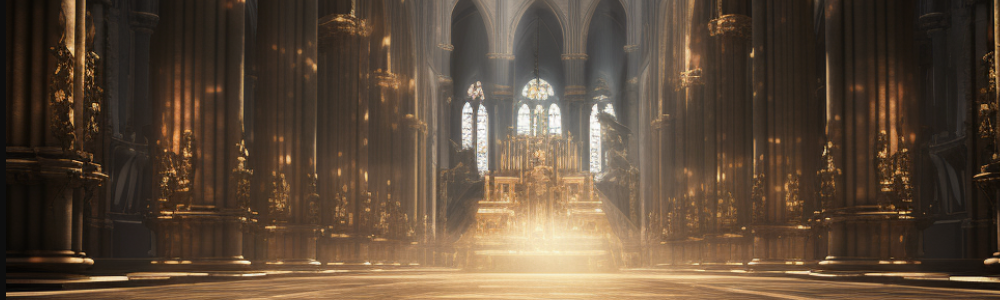
The Sanctuary of Churches and Cathedrals
The grand cathedrals and modest parish churches of the Middle Ages served as the primary canvas for wall art. Stained glass windows, frescoes, mosaics, and tapestries adorned the sacred spaces, transforming them into visual sanctuaries. Every surface, from vaulted ceilings to hidden alcoves, was often embellished with religious motifs and scenes.
The Gothic cathedrals, with their towering spires and intricate carvings, hosted some of the most magnificent examples of medieval wall art. The stained glass windows, in particular, were masterpieces of color and light, narrating biblical stories through vibrant imagery.
The Art of Devotion
Art in the Middle Ages was not merely an aesthetic pursuit; it was an act of devotion. The creation of a religious artwork was seen as a spiritual practice, imbued with reverence and piety. Artists, often anonymous and working within monastic communities, sought to honor God through their craftsmanship.
The themes in wall art were overwhelmingly religious, reflecting the centrality of faith in medieval life. Scenes from the life of Christ, the Virgin Mary, saints, and biblical narratives were common subjects, each with specific symbolic meanings and roles within the liturgy.
A notable example is the Byzantine art of Eastern Europe, where iconic mosaics and frescoes portrayed holy figures with a blend of spiritual abstraction and emotional intensity. These images served as focal points for prayer and contemplation, guiding the viewer toward a higher spiritual plane.
Educating the Faithful
In a time when literacy was rare, especially among the common folk, wall art played a crucial educational role. The images on church walls served as visual sermons, instructing the faithful in the teachings of the Church and the moral principles of Christianity.
- Biblical Narratives: Stories from the Old and New Testaments were depicted in sequential scenes, allowing the viewer to follow the narrative visually.
- Saints and Martyrs: The lives and deeds of saints were portrayed to inspire virtue and devotion among the believers.
- Symbolism and Allegory: Complex theological concepts were represented through symbols and allegories, making them accessible to the lay audience.
The Enduring Legacy of Medieval Wall Art
The wall art of the Middle Ages has left a lasting legacy, preserving a rich heritage of religious thought, cultural tradition, and artistic innovation. The medieval approach to art as a sacred practice, a means of connecting with the divine, continues to inspire contemporary spiritual art.
Moreover, the integration of art and architecture in medieval churches laid the groundwork for immersive artistic experiences, where the space itself becomes a part of the artwork. This concept continues to influence modern installations and public art projects.
Conclusion: An Age of Faith and Beauty
The Middle Ages stands as an age of faith and beauty in the evolution of wall art decor. The religious reverence that permeated the art of this period created a profound connection between the visual and the spiritual, the earthly and the divine.
In the shadows of ancient churches, amid the glow of stained glass and the textures of frescoes, we find a world where art was not just an ornament but a pathway to the sacred, a means of elevating the human spirit and connecting with something greater than oneself.
The wall art of the Middle Ages invites us to reflect on the timeless power of art to inspire, uplift, and transcend, to speak to our deepest beliefs and hopes, and to enrich our lives with beauty, meaning, and grace. It's a testament to the enduring relationship between art and faith, a relationship that continues to resonate in our contemporary world, guiding us toward a deeper understanding of ourselves and the world around us.
Renaissance: A Rebirth of Artistry
The Renaissance, spanning from the 14th to the 17th century, stands as a remarkable turning point in the history of art, including wall art decor. Originating in Italy and later spreading throughout Europe, the Renaissance was a period of revival, innovation, and humanistic inquiry. It marked a shift from the primarily religious art of the Middle Ages to a more secular and individualistic expression. Wall art in the Renaissance came to embody the intellectual curiosity, technical mastery, and creative exploration that characterized the age.
Rediscovery of Classical Ideals
The Renaissance saw a renewed interest in the classical art and philosophy of ancient Greece and Rome. Artists studied the human form with intense curiosity and sought to portray it with a realism and idealism inspired by classical sculptures. The invention of linear perspective allowed artists to create realistic three-dimensional spaces, revolutionizing the portrayal of depth and volume in wall art.
The works of Giotto, one of the early Renaissance painters, exemplified this new approach. His frescoes in the Scrovegni Chapel in Padua displayed an unprecedented naturalism and emotional depth, laying the groundwork for later masters like Leonardo, Michelangelo, and Raphael.
Mastery of Technique
The technical mastery of the Renaissance artists was extraordinary. They experimented with new painting techniques, refined the use of light and shadow, and developed a rich color palette. Frescoes were supplemented by oil painting on walls, allowing for greater detail and luminosity.
Michelangelo's Sistine Chapel ceiling is perhaps the most iconic example of this mastery. His portrayal of the human form, the complex compositions, and the sublime use of color and light brought the biblical narrative to life with a power and beauty that continue to inspire awe.
Humanism and Individual Expression
The Renaissance was marked by the rise of Humanism, a philosophy that emphasized the value and agency of the individual. This shift found expression in wall art, as artists began to infuse their works with personal style and insight. Portraits, self-portraits, and depictions of daily life became more common, reflecting a growing interest in the human experience.
Leonardo da Vinci's "The Last Supper" is a remarkable example of this humanistic approach. Beyond the religious theme, the painting captures the psychological complexity and individuality of the apostles, each reacting to Jesus's announcement of betrayal.
Patronage and the Spread of Art
The Renaissance saw the rise of influential patrons, including the Medici family in Florence, who supported and encouraged artists. This patronage extended beyond religious institutions to private residences and public spaces. Wall art became a symbol of status, culture, and intellect, and its reach extended to various layers of society.
The spread of Renaissance ideas and styles was facilitated by the growing interconnectedness of European cities, the rise of art academies, and the invention of the printing press. Artists traveled, studied, and exchanged ideas, contributing to the vibrant and diverse artistic landscape of the period.
Conclusion: A Legacy of Innovation and Beauty
The Renaissance represents a rebirth of artistry, a flowering of creativity that redefined the possibilities of wall art decor. It was an age where technical skill met intellectual curiosity, where classical ideals blended with innovative experimentation, and where artists sought to capture not just the surface but the very essence of their subjects.
The legacy of the Renaissance continues to resonate in the world of art and beyond. Its humanistic values, its pursuit of excellence, and its celebration of individuality have become foundational principles in Western thought and creativity.
In the frescoes, murals, and panels of the Renaissance, we find a mirror of a time that believed in the power of art to enlighten, to inspire, and to elevate the human spirit. The beauty, complexity, and ingenuity of Renaissance wall art are a timeless testament to the human capacity for wonder, exploration, and creation. It reminds us that art is not just a reflection of its time but a beacon that can guide us toward new horizons of understanding and expression.
Contemporary Era: Digital and Interactive Wall Art
The contemporary era has witnessed an unprecedented fusion of technology, creativity, and innovation in the field of wall art decor. This period, beginning in the latter half of the 20th century and continuing into the 21st, has seen the rise of digital and interactive wall art. Driven by technological advancements and an ever-changing cultural landscape, artists have sought new ways to engage audiences, transcend traditional boundaries, and redefine the very notion of wall art.
The Advent of Digital Art
With the advent of computers and digital technology, artists began to explore the possibilities of creating art in a virtual space. Digital wall art emerged as a genre that embraced the flexibility, precision, and endless potential of the digital medium. Artists could manipulate images, experiment with colors and forms, and even animate their creations.
Early pioneers like Vera Molnar and Manfred Mohr used algorithms and computer programming to generate abstract geometric art. As technology advanced, digital art became more accessible, allowing a wider range of artists to experiment and innovate.

Interactive Wall Art
The incorporation of interactivity into wall art represents a significant shift in the relationship between the viewer and the artwork. Interactive wall art invites the audience to participate, engage, and influence the art itself. Whether through touch, motion sensors, or virtual reality, viewers become collaborators, co-creators in the artistic experience.
Rafael Lozano-Hemmer's interactive installations, such as "33 Questions per Minute," exemplify this new dynamic. His works respond to the presence and actions of the audience, creating a dialogue between the art and the viewer.
The Impact of Social Media and the Internet
The rise of social media platforms and the internet has had a profound impact on contemporary wall art. Artists can share their work with a global audience, engage in online collaborations, and even create art specifically for virtual spaces. Wall art has transcended the physical walls of galleries and museums to inhabit the virtual walls of websites and social media feeds.
Banksy, the anonymous street artist, has used social media to challenge traditional art institutions and engage with a broader audience, sparking debates and discussions around art, politics, and society.
Augmented Reality and Virtual Environments
The integration of augmented reality (AR) and virtual environments into wall art has opened new horizons for creative exploration. Artists can create immersive experiences that blend the physical and virtual worlds, offering viewers novel perspectives and sensory experiences.
Jenny Holzer's "Blue Purple Tilt" is a powerful example of how AR can transform a physical space, enabling viewers to see and interact with virtual texts projected onto the walls.
Sustainability and Social Engagement
Contemporary digital and interactive wall art often reflect concerns about sustainability, social justice, and community engagement. Artists use technology to address pressing global issues, engage with communities, and promote social change.
For example, Olafur Eliasson's "Little Sun" project uses solar-powered LED lights to create wall art while promoting renewable energy in regions without electricity.
Conclusion: A New Frontier of Creativity
The contemporary era of digital and interactive wall art marks a new frontier of creativity. It is a vibrant and diverse field that reflects the complexity, dynamism, and interconnectedness of our modern world.
In the digital brushstrokes, the interactive installations, and the virtual realities of contemporary wall art, we find a reflection of our times, a mirror of our technological aspirations, our cultural explorations, and our social values.
The future of wall art decor is bound to be as exciting and innovative as the era we are living in. The fusion of art and technology promises to continue to challenge our perceptions, expand our horizons, and inspire new ways of seeing and experiencing the world around us.
The contemporary era of wall art is not just about what we see on the wall but how we interact with it, how we connect with it, and how it speaks to us. It's a testament to human ingenuity and a celebration of the endless potential of creativity in a rapidly changing world.